
Mine ventilation is a significant safety concern for many miners. Poor ventilation of the mines causes exposure to harmful gases, heat and dust inside the underground mines. These can cause harmful physiological effects, including death. The concentration of methane and other airborne contaminants can generally be controlled by proper ventilation, capture or drainage-out the methane before entering the host air stream, or isolation (seals and stoppings).
Ignited methane gas is a common source of explosions in coal mines, or, the more violent coal dust explosions. Gases in mines can also poison the workers or displace the oxygen in the mine, causing asphyxiation. For this reason, workers should have gas detection equipment in groups of miners that must be able to detect common gases, such as CO, O2, H2S, CH4 and percentage of Lower Explosion Limit etc.
High temperatures and humidity may result in heat-related illnesses, including heat stroke which can be fatal. Dusts can cause lung problems, including silicosis, asbestosis and pneumoconiosis (also known as miners’ lung or black lung disease). A ventilation system is set up to force a stream of air through the working areas of the mine so that each main work area constantly receives a supply of fresh air.
Miners utilize equipment strong enough to break through extremely hard layers of the Earth's crust. This equipment, combined with the closed workspace that underground miners work in, can cause hearing loss. A miner without proper hearing protection is at a high risk for hearing loss. In the same way, deficiency of light is also harmful for eyesight of miners.
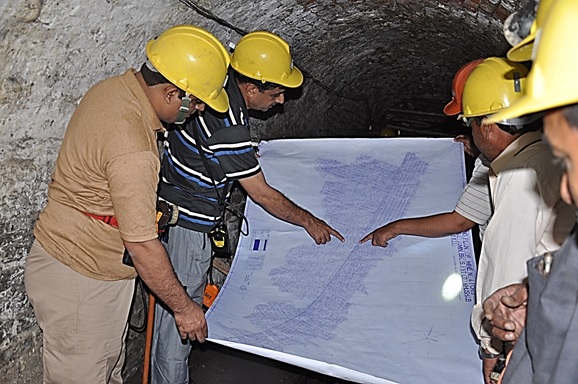
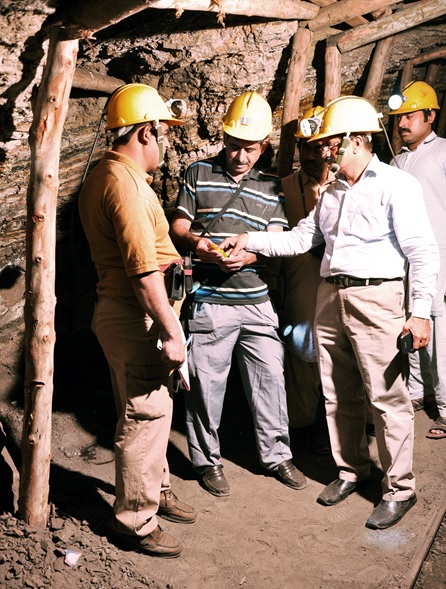
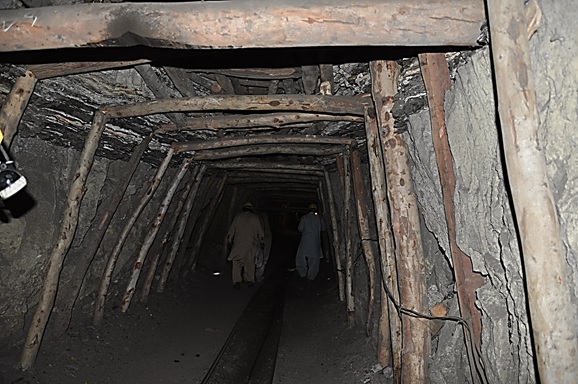
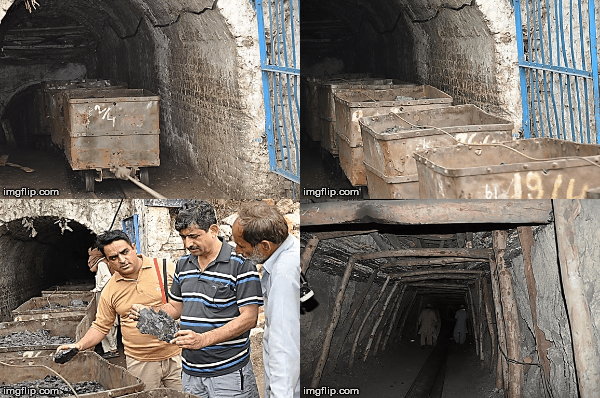
With a view to detect and forecast the happenings of mine disasters, the following project is established:
 |
 |
 |
||
 |
 |